
4.12. 2025 /18.00h
HORIZONTE. ROBERTO URIBE-CASTRO.
ARTIST’S BOOK Public presentation
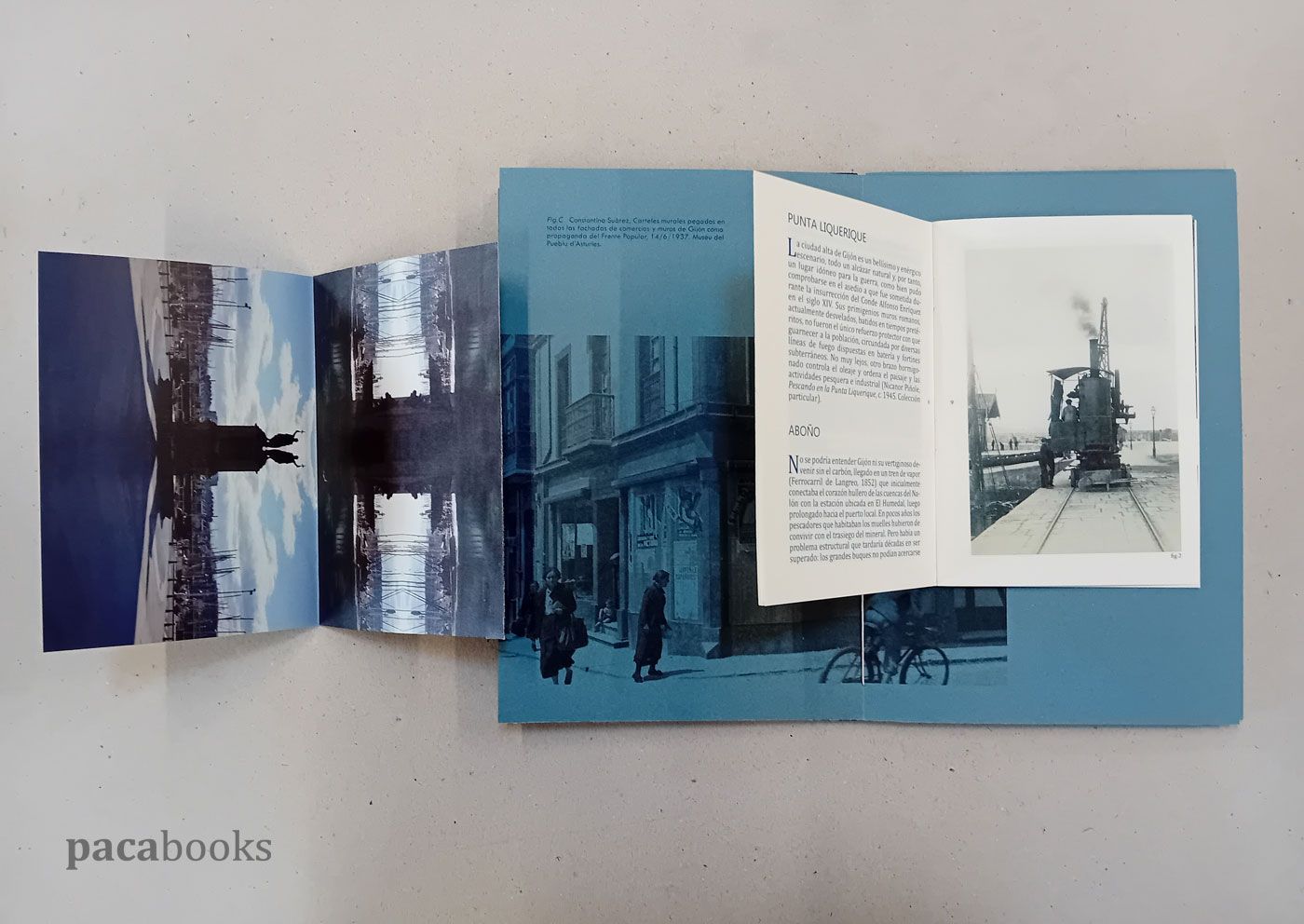
We are pleased to invite you to the event we have organised for Thursday, 4 December, at the Jovellanos Birthplace Museum, to present a project and publication that are the result of many months of collaborative work. We look forward to seeing you there!
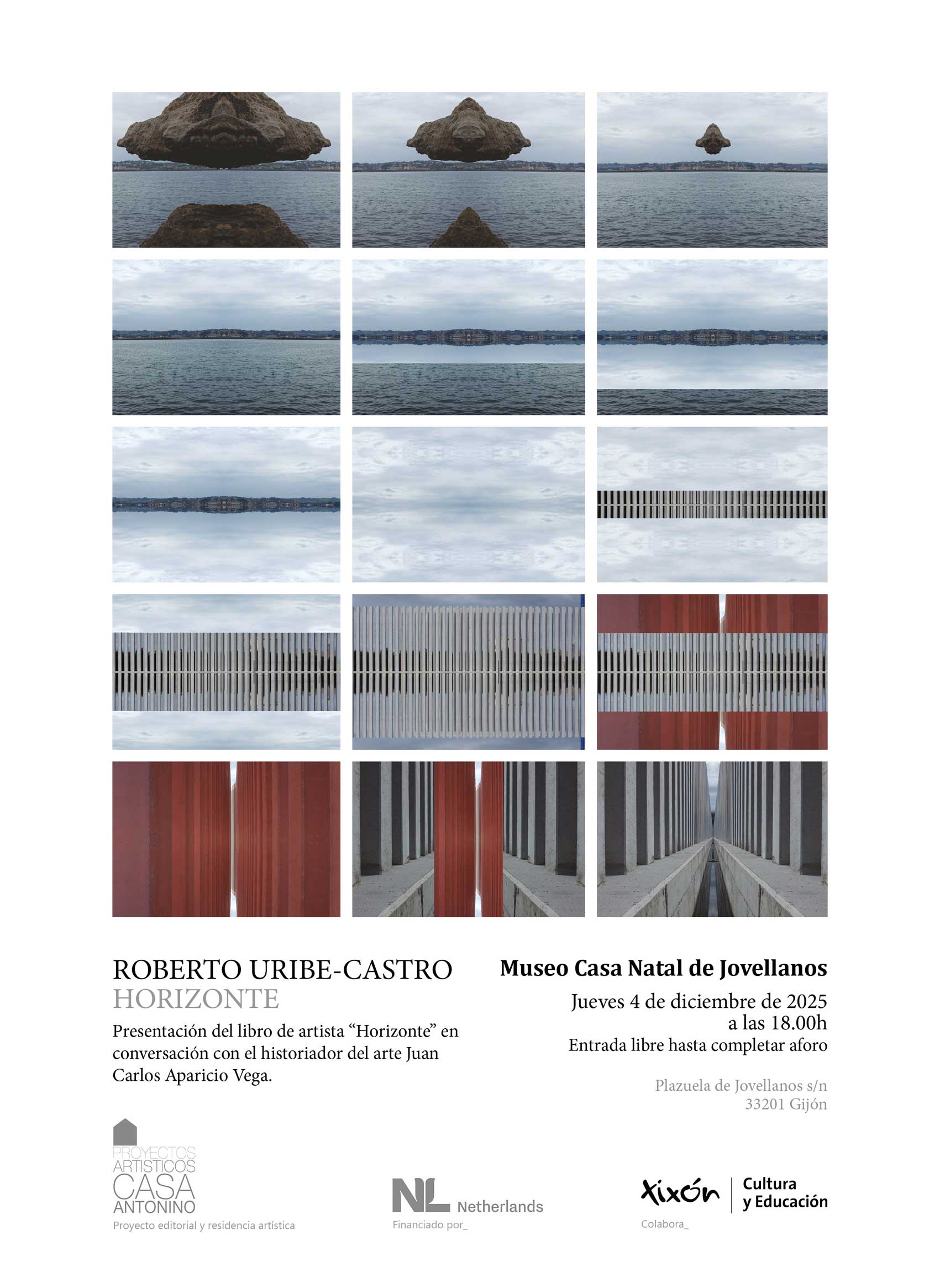
Next 4 December at 6 p.m. at the Jovellanos Birthplace Museum (Plazuela Jovellanos s/n, Gijón), there will be a talk about the recent publication ‘Horizonte’ (PACAbooks editions). The conversation between art historian Juan Carlos Aparicio Vega (University of Oviedo) and artist and architect Roberto Uribe-Castro will address the publication, which is the result of a call for an artistic residency at PACA (Proyectos Artísticos Casa Antonino) in 2024, funded by the Embassy of the Netherlands in Spain. During the talk, introduced by Virginia López as curator of the residency project and designer of the book, they will discuss the contents, editorial and artistic methodology strategies, and the historical and curatorial implications of the book. The publication, with a foreword by researcher Erik Wong, introduces the work of Roberto Uribe-Castro and brings together some of the material collected by Uribe during his residency, based on the premise of Gijón as a post-industrial (¿?) landscape.
HAVE A LOOK TO THE BOOK /pacabooks
Quizás cuando pensamos en horizontes pensamos en futuros, posibles, utópicos, inasibles o deseables. Pero el horizonte que posee tanta carga semántica y poética, tantas posibles visiones, contine también el pasado que lo ha ido conformando en su escala humana, social, política, económica, contiene relaciones de poder y conforma el espacio físico y mental presente.
Por eso para Uribe fue fundamental indagar en el pasado de la ciudad y de Asturias, en el incio de la industrialización -esa misma a la que se alude cuando hablamos de postindustrial. ¿En que punto estamos? Cómo se conforma nuestro horizonte actual? De una forma sutil, el libro abarca una parte de todas esas investigaciones, documentación histórica y un script para una posible instalación audiovisual futura. El libro es, como suele pasar (y como a mí me gusta también), otro cuerpo posible de la obra de un artista, un cuerpo que completa, apunta, sugiere con una materialidad cercana, tocable, odorable, con una temporalidad propia, pausada, profunda, que además perdura en el tiempo. Como ese mar, como esa línea que adquiere espesor y en ella, entonces, podemos sumergirnos.
Perhaps when we think of horizons, we think of futures—possible, utopian, unattainable, or desirable. But the horizon, with its rich semantic and poetic meaning and its many possible visions, also contains the past that has shaped it on a human, social, political, and economic scale. It contains power relations and shapes the present physical and mental space. That is why it was essential for Uribe to investigate the past of the city and of Asturias, at the beginning of industrialisation—the same industrialisation that is referred to when we talk about post-industrialisation. Where are we now? How is our current horizon shaped? In a subtle way, the book covers part of all this research, historical documentation and a script for a possible future audiovisual installation. The book is, as is often the case (and as I also like), another possible body of an artist’s work, a body that completes, points to, suggests with a materiality that is close, touchable, odourable, with its own temporality, unhurried, profound, which also endures over time. Like that sea, like that line that acquires thickness and into which we can then immerse ourselves.
v.lopez. pacabooks* On 4 December we will celebrate!
info del proyecto e invitación a la presentación: https://mailchi.mp/ede3292c46d6/horizonte
proyecto de residencia 2024-2025 / web delartista: https://robertouribecastro.de/es